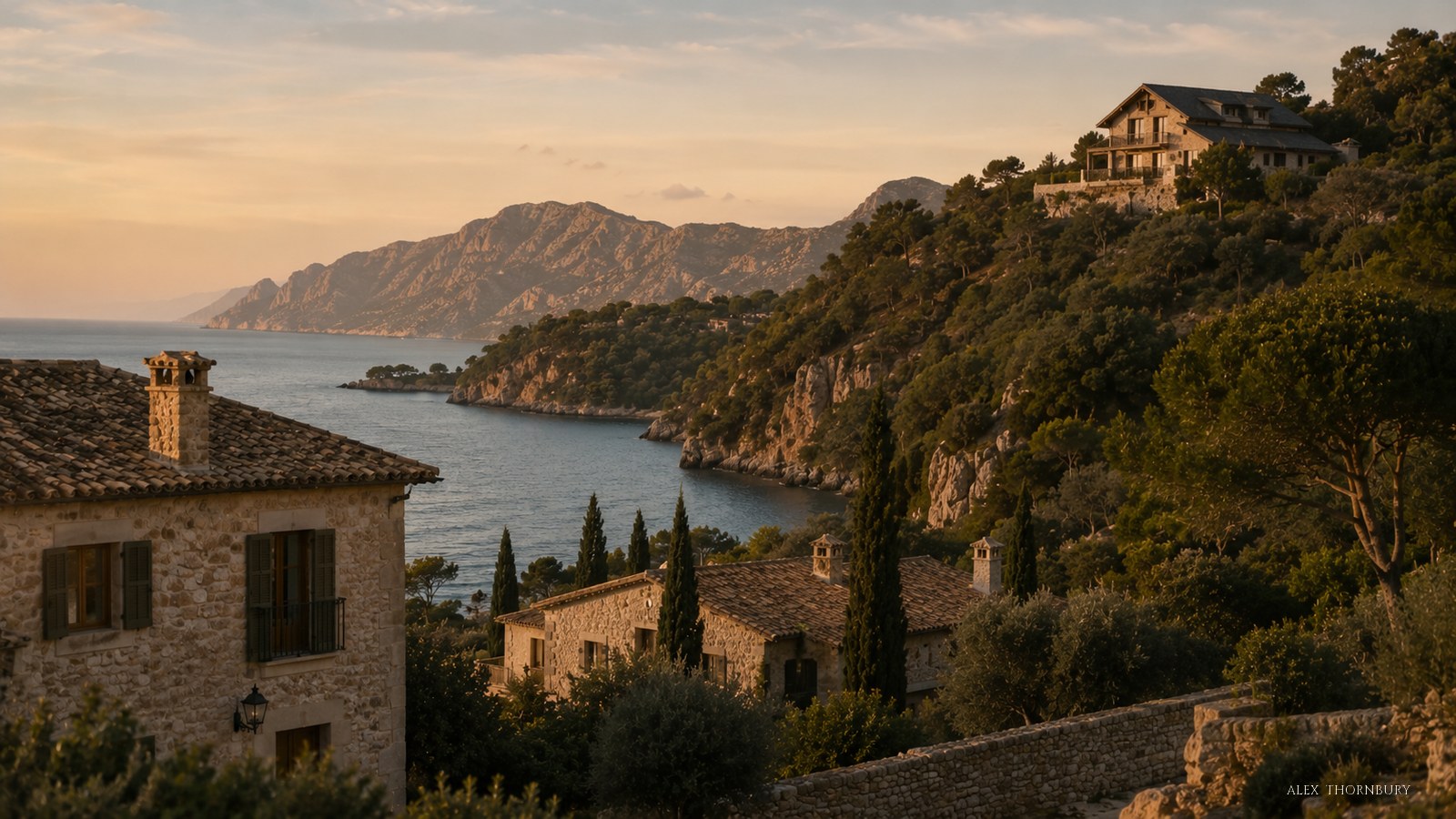
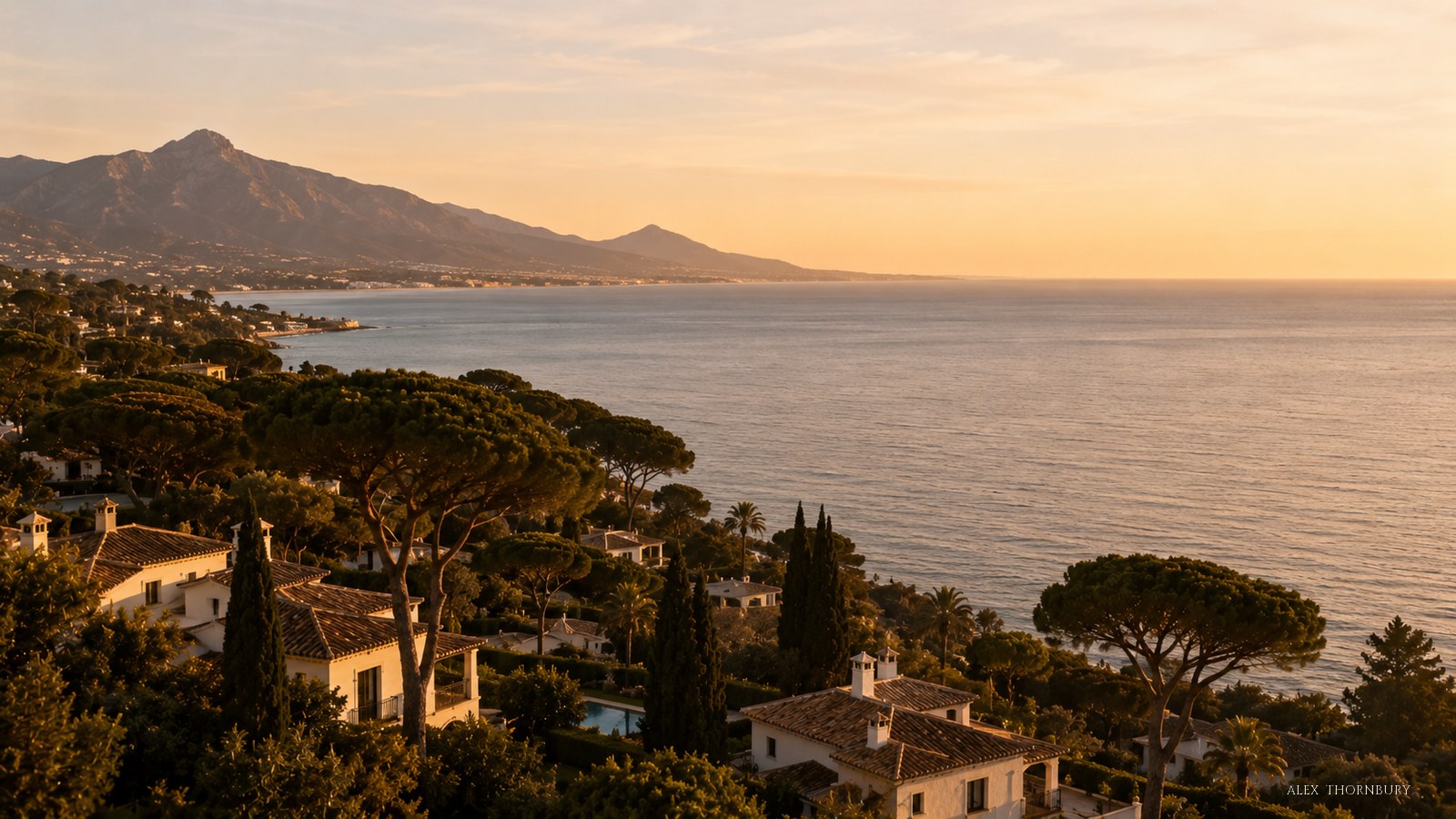
European luxury real estate is not one market. It is a portfolio of national and regional sub-markets that look superficially similar and behave very differently. A useful map separates them by tax position, lifestyle proposition and liquidity profile. Buyers can now see more of that portfolio in one place: marketplaces such as Black Privé list homes across Spain, Portugal, Andorra, Monaco and Dubai.
Spain: the three sub-markets that matter
Spain remains the deepest market for European prime, with three coherent sub-markets. Marbella and the Costa del Sol for the all-year warm-weather buyer (EUR 12-25k per m² at the top). Mallorca for the discretion-conscious German-Scandinavian-British family (EUR 10-18k per m²). Barcelona and Madrid as urban hedges with a separate tax position (EUR 8-14k per m² in prime sub-postcodes). The Catalonian 2025 ITP reform shifted the after-tax economics; the 2024 Balearic ISD reform shifted the succession economics.
France: the South versus Paris divergence
The South of France — Cap d'Antibes, Saint-Jean-Cap-Ferrat, the Provençal hinterland — continues to anchor European UHNWI seasonal buying at EUR 15-40k per m² in prime tiers. The French tax position is materially heavier than the Spanish or principality alternatives, but for buyers committed to the Riviera lifestyle, the long-term liquidity of the prime tier and the depth of professional services compensate. Paris prime (Sixteenth, Seventh, Eighth arrondissements) is increasingly an urban-pied-à-terre play rather than a primary residence at EUR 18-30k per m².
Italy: the seven-per-mille reset
Italy's flat-tax regime for high-net-worth new arrivals (the seven-per-mille, raised to EUR 200,000 per year in August 2024) has driven a step-change in international buying interest in Tuscany, Lake Como and Sardinia's Costa Smeralda. Tuscany rural villas at EUR 5-12k per m² remain reasonable value; Lake Como prime at EUR 15-25k per m² is now competitive with the Riviera; Costa Smeralda's Pevero-Romazzino corridor at EUR 25-50k per m² remains the most expensive Italian sub-market.
Portugal: the Golden Visa wind-down
The Portuguese Non-Habitual Resident regime closed to new applicants in 2024, replaced by the more restrictive Tax Incentive for Scientific Research and Innovation regime. The Golden Visa programme remains operational but property is no longer a qualifying route in Lisbon and Porto. Lisbon prime (Chiado, Príncipe Real) at EUR 7-12k per m² has stabilised after the post-2020 surge; Algarve prime (Quinta do Lago, Vale do Lobo) at EUR 6-10k per m² remains the steadiest Portuguese position.
Switzerland: the lump-sum tax position
Switzerland's forfait fiscal — the lump-sum tax regime — remains the strongest tax position in central Europe for the international buyer prepared to commit to a Swiss canton. Lake Geneva prime (Vaud canton's Lavaux corridor, Geneva's left bank) at EUR 20-35k per m²; Lugano and the Ticino lakes at EUR 12-22k per m²; the Engadin and Zermatt at EUR 15-30k per m² for chalet-tier properties. The forfait is administered cantonally and requires negotiation.
The Greek islands: the post-Golden-Visa entrant
The Greek islands — Mykonos, Paros, Antiparos and the lesser-publicised Cyclades — have entered the international UHNWI map seriously in the last five years. Mykonos prime at EUR 8-15k per m² remains the most international market; Paros and Antiparos at EUR 5-9k per m² have benefited from the Mykonos overflow. The Greek Golden Visa raised its property threshold to EUR 500,000 in 2024 and to EUR 800,000 for Athens, Thessaloniki and Mykonos in mid-2024.
The principalities: Monaco and Andorra
Monaco prime continues at EUR 50-110k per m² across the principality, with the Mareterra extension (inaugurated December 2024) resetting the upper price band. Andorra la Vella prime at EUR 6-9k per m² and the upper-parish ski-adjacent positions at EUR 5-8k per m² remain the most accessible European principality entry. The two are quite distinct propositions and rarely on the same shortlist.
Source: Savills — Prime residential capital value analysis and forecast